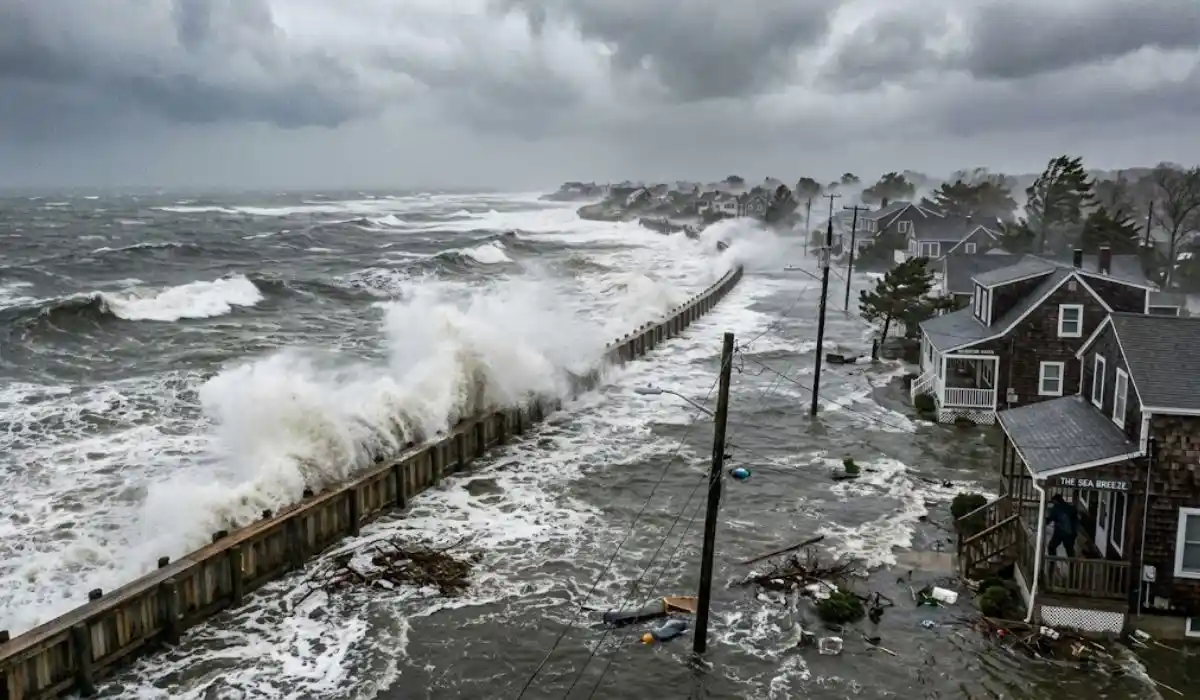
A nor'easter that hit the South Shore in early January stacked heavy rain, high tide, and a full-moon storm surge together into what local officials described as one of the worst combinations the area had seen in some time. The damage it left behind is a useful, specific illustration of what street-level bay flooding actually does to a South Shore community, separate from the more abstract version of the same warning.
Along the Bay Shore marina, the parking lots around Lakehouse restaurant were completely submerged, though the building itself sat roughly six feet above the water and stayed dry inside. Chowder Bar, on Maple Avenue, was not as fortunate: more than 18 inches of water got inside the restaurant itself. In the Village of Brightwaters, Concourse West along the canal flooded from the combination of high tide, heavy rain, and storm surge working together, and the mayor there reported homeowners who had never had water in their basements before suddenly did. In West Islip, Marina Park at the end of Beach Road flooded badly enough to submerge the little league fields on the property. Extreme wind that accompanied the storm brought down trees in multiple locations, including one that took out telephone poles on Gibson Street in Bay Shore.
Why Street Flooding Is Not A Separate Problem From Your House
It is tempting to treat flooded streets as a municipal inconvenience rather than a direct threat to your property, especially if the water on the road hasn't visibly reached your door. That instinct is wrong on the South Shore for a specific reason: street flooding here usually means storm drains have already backed up and reversed, which means the same water pushing up through catch basins in the road is also finding its way toward any low point on your property, including a basement below the street's grade.
The Brightwaters pattern from that January storm makes this concrete. Homeowners who had never taken on water before did during that event, and the mayor's own framing was specific: this was a severe storm that came out of an unusual combination of factors, not a routine event that recurs every season. That combination, full-moon high tide plus heavy rain plus surge, is exactly the setup that turns "the street flooded" into a genuine flood damage restoration call even for properties with no prior flooding history.
What To Do When It's Happening
Move vehicles off low sections of your property and away from the street if flooding is forecast and you have any advance notice, since parked cars in these events routinely end up sitting in water deep enough to cause serious damage. Avoid driving through any flooded street on the South Shore during or after a storm like this one; the water covering a road can be significantly deeper than it appears, and moving faster than it looks, especially anywhere near a canal or bulkhead.
Check your sump pump before the surge peaks, not after, since a storm damage restoration crew can only work as fast as the source is contained, and power outages during a storm this size are common and a pump with no backup power will fail at exactly the moment it's needed most. If your property is near a canal, like the homes along Brightwaters' Concourse West, understand that canal-adjacent flooding can arrive from a different direction than street flooding and may affect your property even if the main road nearby stays passable.
After The Water Recedes
Street flooding receding does not mean your property is done taking on water, particularly if groundwater was elevated by the event. Check basements again after the next high tide cycle, not just once the street looks clear. And treat any water that did get inside as needing fast extraction regardless of how the event compares to something like Sandy; a January storm that put 18 inches of water inside a Bay Shore restaurant is a serious flooding event on its own terms, independent of how it stacks up historically.
What Happened Beyond The Waterfront
That same January storm's damage wasn't limited to flooding. The extreme wind that accompanied it brought down trees across multiple South Shore locations, and on Gibson Street in Bay Shore specifically, a fallen tree took out telephone poles along with it, the kind of secondary damage that compounds a flooding event with power and communication disruption at exactly the moment residents most need both. Multiple trees also came down in the Village of Brightwaters during the same storm, adding debris-related property risk on top of the water damage many homeowners there were already dealing with for the first time.
This combination, wind damage and flooding arriving together rather than as separate events, is common enough on the South Shore that preparation for one should really account for both. A property that secures against flooding but has large, mature trees close to the structure is still exposed to a real risk the same storm is likely to bring.
What Business And Property Owners Learned
Lakehouse restaurant's experience during that storm, dry inside despite a completely submerged parking lot, illustrates a distinction worth applying to residential property too: elevation relative to the immediate surroundings matters enormously, sometimes more than proximity to the water itself. A structure sitting even a modest few feet above its surrounding grade can stay dry through an event that devastates a neighboring property at a lower elevation, even when both are equally close to the bay.
For homeowners uncertain of their own property's elevation relative to nearby flooding history, a survey or even a basic comparison against neighboring properties' documented flood experience during past events gives a useful, low-cost read on relative risk before the next storm arrives.
Canal-Adjacent Properties Face A Distinct Version Of This Risk
Brightwaters' Concourse West flooding during that January storm illustrates a risk profile specific to canal-front properties that differs somewhat from open-bay frontage. Canals concentrate and channel storm surge in ways that can produce locally severe flooding even when nearby, non-canal-adjacent streets fare better during the same event. If your property sits directly on a canal rather than open water, treat surge warnings with particular seriousness regardless of how the broader area's forecast reads, since canal geometry can amplify water levels beyond what the general area experiences.