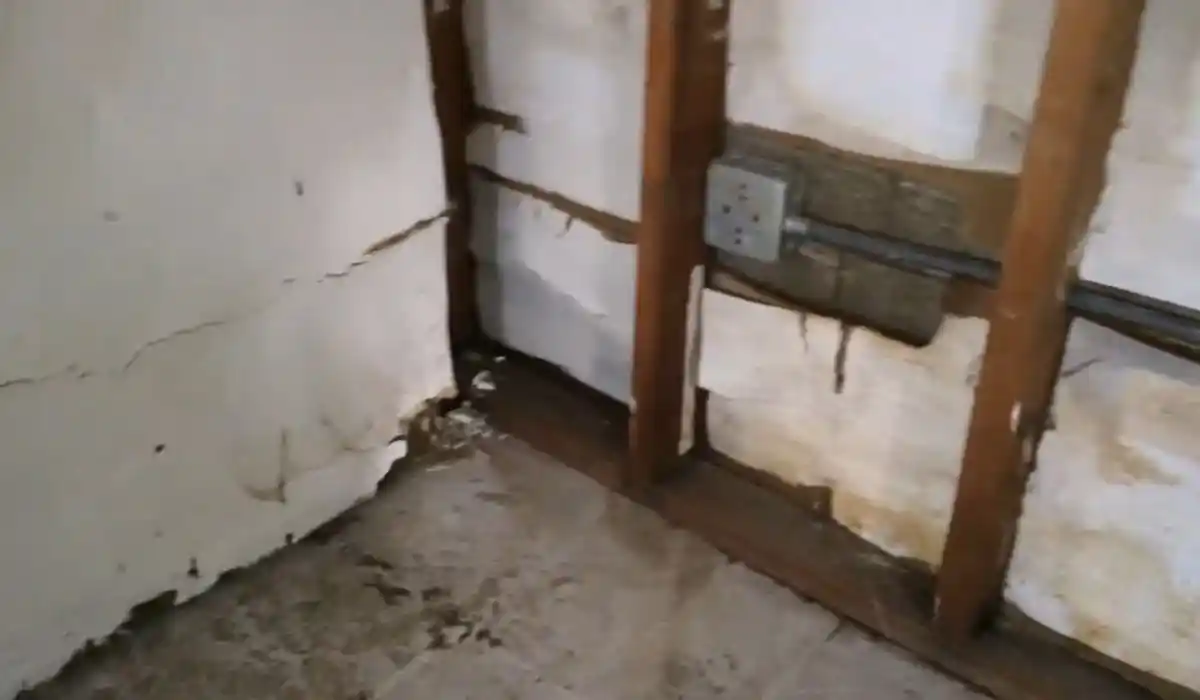
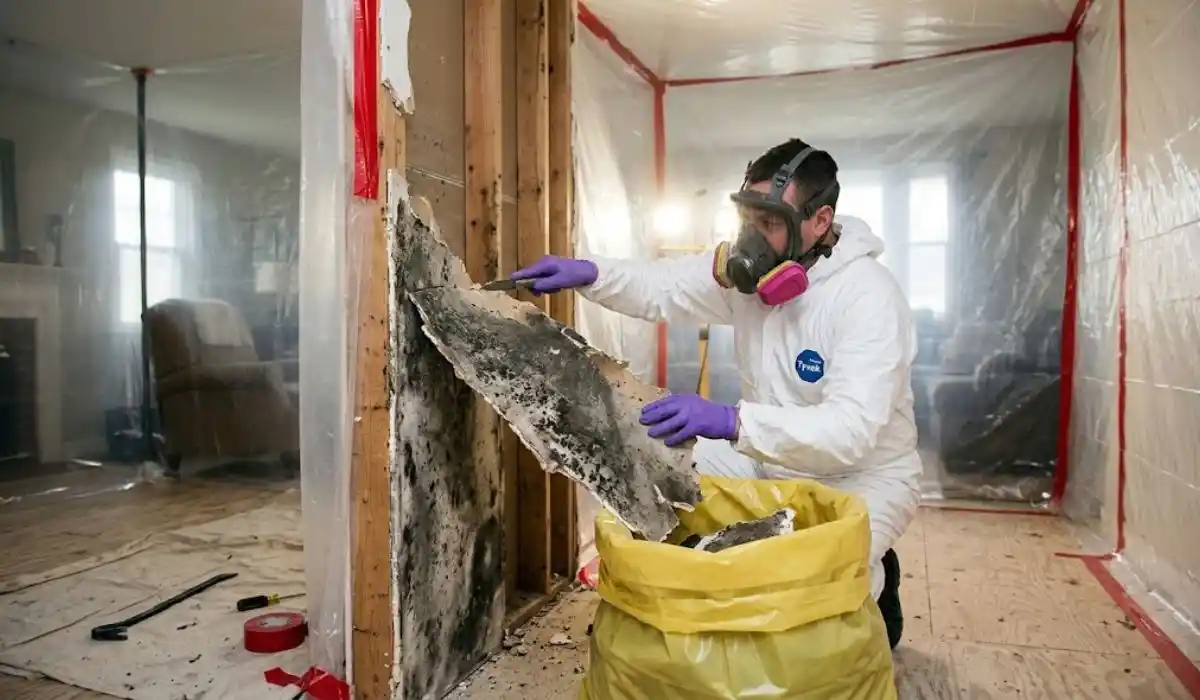
Remediation is the full-scope version of mold work. It covers containment, removal of affected material, treatment of surfaces that stay, correction of the moisture source that allowed growth in the first place, and verification afterward that the area is genuinely clear.
How Mold Remediation Works
The distinction that matters is between removal and remediation. Removal clears what is visible. Remediation takes responsibility for the condition behind it, which is why it includes source correction and post-work verification. A remediation that skips the moisture fix is a removal job with a longer invoice, and the growth comes back.
What Leads To This
Growth almost always traces back to one of the moisture conditions below.
Water damage that was never fully dried
Chronic humidity in basements and crawlspaces
Hidden plumbing leaks behind walls or under fixtures
Inadequate ventilation in bathrooms and laundry areas
Roof and envelope leaks wetting concealed material
Condensation on cold surfaces through humid months
Growth distributed through HVAC ductwork
Mold Remediation Needed Now?
A crew can begin work today.
When To Call
Growth Across Multiple Rooms
Spread beyond one area needs a coordinated containment plan.
Musty Odour Without Visible Growth
Smell indicating growth in a concealed cavity or space.
Recurrence After A Prior Cleanup
Growth returning means the moisture source was never resolved.
Growth Near Air Handling Equipment
Presence close to ductwork raises distribution risk.
Step By Step
Call Dispatch
Describe what you have found.
Inspect
Moisture readings and extent mapped.
Contain & Remove
Work zone isolated, growth cleared.
Verify
Area confirmed clear before closing up.
Why Islip Properties See This
Several recurring conditions make hidden growth more likely in this area.
Humid Coastal Summers
South Shore humidity keeps indoor moisture elevated for months.
Crawlspace Construction
Trapped moisture below the floor that living space never reveals.
Unvented Or Blocked Attics
Warm moist air condensing on cold sheathing in winter.
Undried Water Events
Prior leaks or flooding where drying was never confirmed.
Marginal Bathroom Ventilation
Fans that meet code minimums but not real-world moisture loads.
Finished Basements
Drywall and carpet below grade without dedicated dehumidification.
Cold-Surface Condensation
Uninsulated lines and walls sweating through humid months.
Aging Ductwork
Systems that can distribute spores through a property.
Cost Of Mold Remediation In Islip
Remediation pricing follows affected square footage and containment complexity, plus whatever work correcting the moisture source requires.
Remediation includes both the removal scope and whatever trade work correcting the moisture source requires, so it runs higher than removal alone. Multi-room spread and HVAC involvement are the two largest escalators.
Ranges are typical starting points and vary by scope. Every job gets a written, itemized assessment before work begins — call for an evaluation.
Reducing The Risk
Keep indoor humidity below 60 percent, lower where you can manage it.
Run bathroom exhaust fans 20 to 30 minutes after showering.
Confirm bath and dryer vents terminate outdoors, not into the attic.
Dry any water intrusion fully within 48 hours.
Store belongings in plastic bins rather than cardboard in damp areas.
Keep stored items off the floor and away from exterior walls.
What You Can Do Now
Do Not Disturb The Growth
Scrubbing or brushing releases spores into the air.
Isolate The Area
Close doors to the affected space to limit airborne spread.
Turn Off HVAC
Running the system can distribute spores through the property.
Find The Moisture
Note any leak, condensation, or damp area near the growth.
Photograph What You See
Documentation supports both scoping and any insurance claim.
Skip The Bleach
It does not reach growth inside porous material and leaves moisture behind.
Working With Your Carrier
Mold coverage depends almost entirely on the underlying cause. Growth following a covered sudden water event is treated differently from growth attributed to long-term humidity or deferred maintenance.
We document damage, provide detailed scope-of-work reports, and communicate directly with most major carriers. That documentation is provided to you regardless of whether you ultimately file.
If you are still weighing whether to open a claim, the on-site assessment and written scope cost the same either way. Nothing in the documentation obliges you to file. Plenty of property owners review the scope first, compare it against their deductible, and decide from there.
FAQs
Remediation adds moisture-source correction and post-work verification. Removal only clears visible growth.
Yes, a written summary of the work performed and verification results.
Where growth may have spread through the system, yes.
Often, depending on scope. Containment usually keeps the rest of the property usable.
A follow-up assessment can be arranged to confirm the area stays clear.
It depends on the underlying cause and your policy. We document the full scope regardless.
Small scopes finish in a few days; multi-room work takes longer.
It is bagged under containment and disposed of properly.
We correct or coordinate correction of the moisture source as part of the scope.
Inspect and document first, provide a written scope, then contain, remove, treat, and verify. The moisture source gets corrected as part of the same job, not left for later.
Yes. A leak that led to mold, like an upstairs toilet leak affecting a basement ceiling, is scoped as one job covering both.