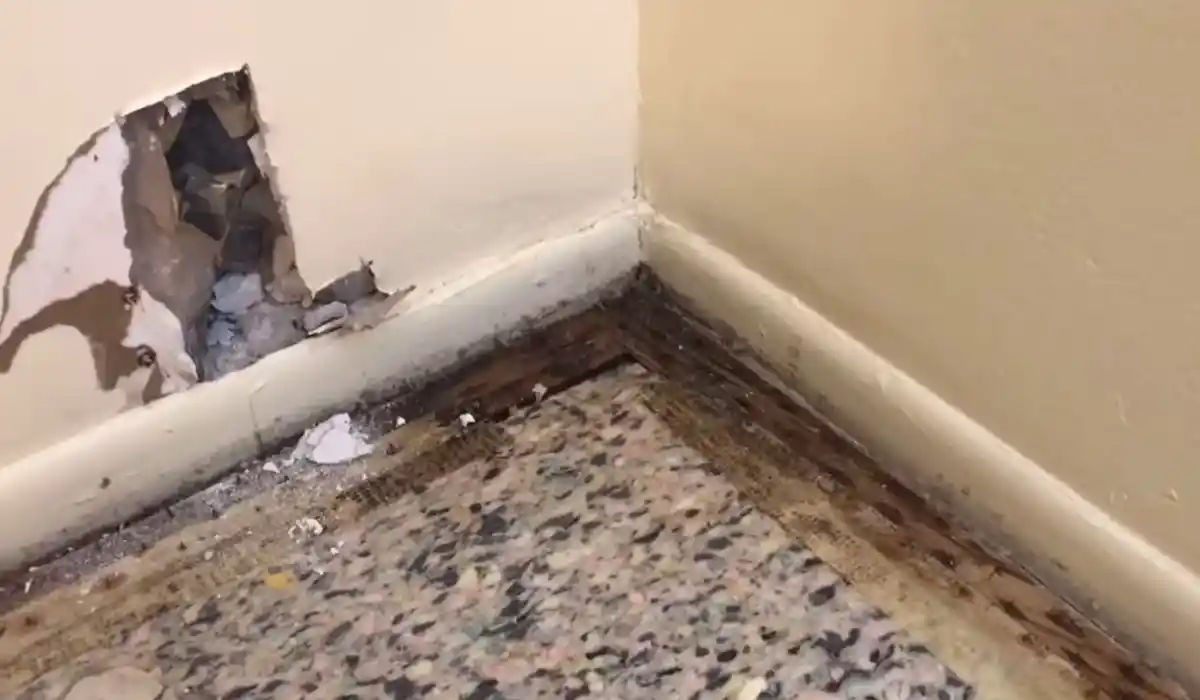
Removal addresses growth that is already visible and identified. It is the physical clearing step, and it is deliberately narrower in scope than full remediation, which also takes on correcting the moisture source and verifying the result afterward.
How Mold Removal Works
Crews contain the work area, establish negative air pressure so spores do not migrate, remove porous material that cannot be salvaged, and clean and treat non-porous surfaces that can stay. Removed material is bagged and disposed of under containment rather than carried openly through the property.
What Leads To This
Growth almost always traces back to one of the moisture conditions below.
Visible growth on drywall, trim, or framing
Growth discovered during renovation demolition
Surface growth in a confirmed damp area
Growth found behind furniture on an exterior wall
Localized growth following a known, corrected leak
Mold Removal Needed Now?
A crew can begin work today.
When To Call
Visible Growth On Surfaces
Identifiable growth on walls, ceilings, framing, or flooring.
Localized Musty Odor
Smell concentrated in one identifiable area.
Growth Found During Demolition
Discovery when an assembly is opened for other work.
Discoloration Spreading Slowly
A patch that has visibly grown since it was first noticed.
Step By Step
Call Dispatch
Describe what you have found.
Inspect
Moisture readings and extent mapped.
Contain & Remove
Work zone isolated, growth cleared.
Verify
Area confirmed clear before closing up.
Why Islip Properties See This
Several recurring conditions make hidden growth more likely in this area.
Crawlspace Construction
Trapped moisture below the floor that living space never reveals.
Unvented Or Blocked Attics
Warm moist air condensing on cold sheathing in winter.
Undried Water Events
Prior leaks or flooding where drying was never confirmed.
Marginal Bathroom Ventilation
Fans that meet code minimums but not real-world moisture loads.
Finished Basements
Drywall and carpet below grade without dedicated dehumidification.
Cold-Surface Condensation
Uninsulated lines and walls sweating through humid months.
Aging Ductwork
Systems that can distribute spores through a property.
Humid Coastal Summers
South Shore humidity keeps indoor moisture elevated for months.
Cost Of Mold Removal In Islip
Remediation pricing follows affected square footage and containment complexity, plus whatever work correcting the moisture source requires.
Removal pricing follows affected square footage and containment complexity. Small isolated areas are straightforward; multiple separate areas cost more than one larger area because each needs its own containment setup.
Scope is confirmed on-site and documented in writing before work begins. The figures here are a planning reference, not a quote.
Reducing The Risk
Check behind furniture on exterior walls once or twice a year.
Keep indoor humidity below 60 percent, lower where you can manage it.
Run bathroom exhaust fans 20 to 30 minutes after showering.
Confirm bath and dryer vents terminate outdoors, not into the attic.
Dry any water intrusion fully within 48 hours.
Store belongings in plastic bins rather than cardboard in damp areas.
What You Can Do Now
Find The Moisture
Note any leak, condensation, or damp area near the growth.
Photograph What You See
Documentation supports both scoping and any insurance claim.
Skip The Bleach
It does not reach growth inside porous material and leaves moisture behind.
Do Not Disturb The Growth
Scrubbing or brushing releases spores into the air.
Isolate The Area
Close doors to the affected space to limit airborne spread.
Turn Off HVAC
Running the system can distribute spores through the property.
Working With Your Carrier
We provide a written scope, photographs, and post-remediation verification results, which is the record most carriers want when a mold claim is reviewed.
We document damage, provide detailed scope-of-work reports, and communicate directly with most major carriers. That documentation is provided to you regardless of whether you ultimately file.
If you are still weighing whether to open a claim, the on-site assessment and written scope cost the same either way. Nothing in the documentation obliges you to file. Plenty of property owners review the scope first, compare it against their deductible, and decide from there.
FAQs
No. Removal clears visible growth. Remediation adds moisture-source correction and verification.
Physical containment barriers plus negative air pressure keep spores inside the work zone.
Usually yes. Porous material with established growth generally cannot.
Only if the moisture source was already corrected. Otherwise growth returns.
Small areas often finish within a day. Larger or multi-area scopes take longer.