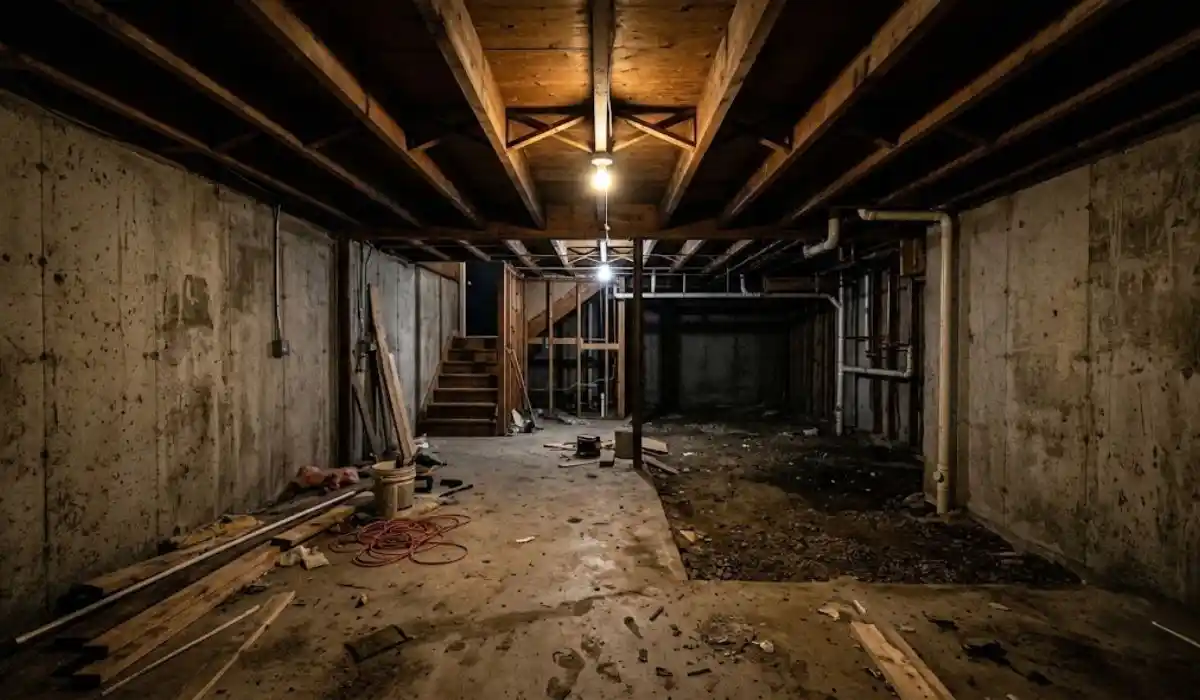
The question of which flooring holds up better in a flooded basement comes up constantly during a basement water removal visit with South Shore homeowners deciding how to finish or refinish a below-grade space that has flooded before, or is likely to at some point given the area's storm surge and high water table exposure. The honest answer is that neither material is flood-proof, but they fail along different timelines and by different mechanisms, and understanding those differences changes what's actually worth choosing for a basement in a flood-prone part of Islip.
How Carpet Actually Fails
Carpet itself is often more salvageable than most homeowners assume, provided the water involved was clean and extraction happened quickly, generally within the first 24 to 48 hours. The bigger problem is almost always the pad underneath, which absorbs dramatically more water than the carpet fiber itself and dries far more slowly, sitting against the subfloor where airflow barely reaches it. In most flooding events of any real duration, pad gets removed even when the carpet above it is ultimately kept and cleaned.
Contamination changes this equation entirely. Any carpet that contacted Category 2 or Category 3 water, greywater or sewage-contaminated water, has to be removed and disposed of regardless of how quickly extraction happened, since contaminated water saturating a porous material like carpet and pad cannot be reliably sanitized afterward. For a South Shore basement where flooding sometimes involves bay water or storm-drain backflow rather than clean supply-line water, this contamination question, not just how long the water sat, often decides the outcome.
How Hardwood Actually Fails
Solid hardwood flooring responds to water exposure by absorbing moisture unevenly across each board, which causes cupping, a warping where the edges of each plank rise higher than the center, and in more severe cases, crowning, where the reverse happens. This deformation happens even with clean water and even with relatively brief exposure, since wood is simply more moisture-reactive than most people expect. Once cupping sets in, the flooring often cannot be fully restored to flat even after the moisture problem is resolved, and refinishing sometimes can't fully correct it either, particularly if the boards absorbed water on both the top and bottom surfaces.
Engineered hardwood, built from thinner layers of real wood over a plywood or composite base, is generally more moisture-resistant than solid hardwood in short, limited exposure, but it has a lower tolerance for prolonged saturation, since the layered construction can delaminate if water sits long enough to compromise the adhesive bonding the layers together.
What This Means For A Flood-Prone Basement Specifically
For a basement with any real history of taking on water, or any real risk of it given proximity to the bay or a documented high water table, both flooring types carry meaningful downside, just at different points in the process. Carpet's failure point is largely about response speed and water category: fast extraction of clean water often saves it, contamination or delay usually doesn't. Hardwood's failure point is more about exposure duration and moisture penetration generally, regardless of how contaminated the water was, since the deformation mechanism is physical rather than biological.
A middle option worth considering for a genuinely flood-prone basement, discussed during a structural drying assessment, is a water-resistant luxury vinyl product, which doesn't carry the pad-absorption problem carpet has and doesn't warp the way solid wood does, though it comes with its own tradeoffs in comfort and appearance that not every homeowner finds acceptable as a substitute for either traditional option.
Underlayment choice matters almost as much as the surface material itself. A moisture-resistant underlayment beneath any flooring type in a basement, rather than the standard version used on upper floors, adds a real margin against minor seepage that would otherwise reach the finish material directly.
What Insurance Actually Reimburses For Each Material
Flooring choice also intersects with the NFIP basement coverage gap that affects many South Shore properties. Standard flood insurance does not cover finished-basement flooring of any type as part of building coverage, whether that's carpet, hardwood, or luxury vinyl, which means the replacement cost for whichever material you choose is very likely coming out of pocket regardless of what caused the flooding, unless you've specifically purchased contents or additional coverage that addresses it. That reality shifts the calculation somewhat: if replacement cost isn't going to be reimbursed either way, the material's actual resilience to the next flooding event matters more than its insurance treatment, since there isn't meaningfully different insurance treatment to weigh in the first place.
This is part of why some South Shore homeowners in genuinely flood-prone basements choose the vinyl option specifically, not because it's cheaper to replace, but because it's less likely to need replacing at all after a moderate flooding event that would compromise either carpet or hardwood.
The Practical Takeaway
Whichever flooring a South Shore basement has, the single biggest factor in whether it survives a flooding event isn't the material choice at all, it's how quickly extraction and drying begin once water is discovered. A hardwood floor dried within hours has a real chance of avoiding significant cupping. Carpet and pad extracted the same day, assuming clean water, often comes through intact. The material matters, but response speed tends to matter more.
Whichever flooring is chosen, a moisture-resistant underlayment beneath it is a small added cost worth including in a basement specifically, given how often the space takes on at least minor moisture over time.
For basements with a documented flood history rather than just a theoretical risk, some restoration contractors can advise on flood-resistant baseboard and trim options too, since standard wood trim absorbs and wicks water in the same way solid hardwood does, often becoming the first visible damage even when the main flooring survives.
Whatever combination of flooring and trim a South Shore basement ends up with, treating it as inherently temporary, something that will likely need attention again after a future flooding event, tends to produce more realistic material choices than assuming any single renovation is the last one this space will need.