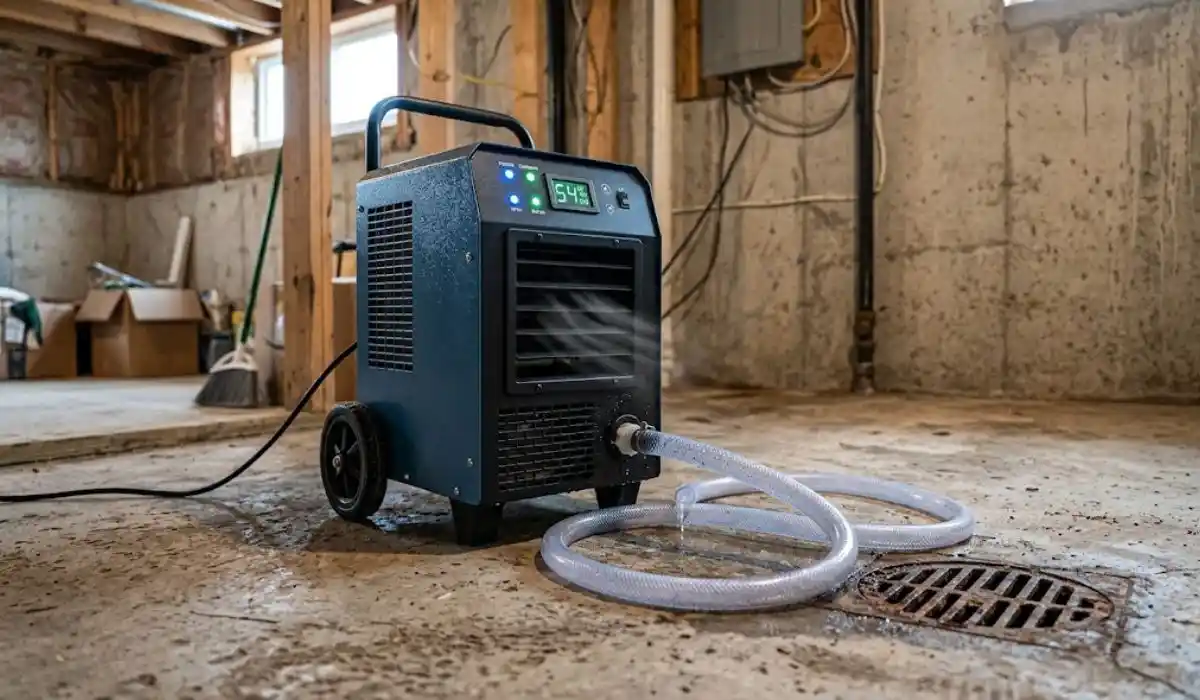
Not every wet basement in Islip needs a restoration crew, and pretending otherwise doesn't serve anyone well. But the line between genuinely DIY-manageable flooding and a situation that needs professional extraction and drying is narrower than most homeowners assume, and getting that call wrong in either direction has real costs, either an unnecessary service call or a mold problem three weeks later that costs far more than the original water event.
When DIY Genuinely Works
A small, clean-water event, a few gallons from a supply line that was caught and shut off quickly, confined to a hard-surface floor with no carpet, pad, or drywall contact, and addressed within a few hours, is realistically within DIY range for a reasonably capable homeowner. The honest timeline looks like this: thirty minutes to an hour to extract standing water with a wet-dry shop vac, then two to four days of running box fans and a rented or owned dehumidifier to bring the affected area's moisture content down to a normal range, checking periodically with a basic moisture meter if you have access to one.
The key qualifiers that make this timeline realistic: the water has to be clean, category 1, not contaminated by sewage or significant contact with dirty groundwater. The volume has to be small enough that a shop vac can reasonably keep pace. And it has to be addressed within the first several hours, not discovered days later after it's already spread and started soaking into subfloor and framing.
When The Timeline Stops Being Realistic
Once water has reached carpet and pad, drywall, or any significant square footage, the DIY timeline extends dramatically, and structural drying equipment closes that gap in days rather than weeks and the outcome becomes far less certain. Household fans and a single consumer dehumidifier are not equivalent to the commercial-grade air movers and dehumidification equipment a restoration crew brings, which are sized specifically to the affected square footage and monitored with professional moisture meters rather than guesswork. A homeowner attempting to dry a genuinely soaked carpet and subfloor with household equipment often spends a week or more without reaching the moisture levels professional equipment would achieve in two to three days, and that extended timeline is exactly the window where mold risk climbs sharply.
Any water that reached wall cavities, insulation, or subfloor in more than a token amount is genuinely difficult to verify as dry without professional-grade moisture meters, since a surface that feels dry to the touch can still register elevated readings well below it. This is the point where DIY confidence becomes a real liability: a basement that looks and feels dry after a week of fans running can still be holding enough moisture in the framing to support mold growth, invisibly, for weeks afterward, which is exactly the outcome a mold inspection a few months later ends up documenting.
The Contamination Question Overrides Everything Else
Regardless of volume or how quickly you caught it, any water involving sewage backup, standing groundwater that entered from outside, or storm surge is Category 2 or 3 water and needs professional handling, full stop. This isn't a judgment call based on how bad it looks. Contaminated water carries health risks that household cleaning products and consumer-grade equipment aren't designed to address safely, and porous material that contacted it needs removal and disposal protocols a DIY approach simply can't replicate.
A Realistic Decision Framework
Ask three questions. Was the water clean, or did it involve sewage, groundwater, or bay water? Did it reach carpet, pad, drywall, or subfloor in more than a small, contained area? And did more than a few hours pass before you started addressing it? A "no" to all three genuinely supports a DIY approach with reasonable confidence. A "yes" to any one of them is the point where the cost of professional extraction and drying is cheaper, in expectation, than the risk of an incomplete DIY job that surfaces as a mold problem or a compromised subfloor months later.
For anything in between, a paid assessment alone, without committing to a full restoration scope, is a reasonable middle path: it gives you an honest, meter-based read on how far the water actually travelled before you decide which path makes sense for your specific situation.
The Hidden Cost Of A DIY Job That Doesn't Fully Work
The real financial risk in the DIY path isn't the time spent running fans, it's what happens when a DIY attempt looks successful but leaves residual moisture in framing or subfloor that isn't discovered until mold growth becomes visible weeks later. At that point, the scope of work needed is often larger than what the original flooding would have required if handled professionally from the start, since mold remediation adds an entire additional phase, and in New York specifically, the Article 32 licensing requirements that govern any remediation area of 10 square feet or more.
This is the actual argument for erring toward professional assessment when genuinely uncertain: not that DIY is incapable of working, but that the cost of a DIY attempt that fails silently is considerably higher than the cost of a professional assessment that confirms DIY was the right call in the first place.
What A Professional Assessment Actually Costs
An assessment-only visit, without committing to full extraction and drying services, is typically priced well below the cost of the restoration work itself, and it gives you moisture readings from professional-grade equipment rather than a guess based on how a surface feels to the touch. For a borderline case, water that might be small enough for DIY but reached an area you can't fully verify is dry on your own, that assessment cost is cheap insurance against the much larger cost of an undetected moisture problem down the line.
What To Have Ready If You Do Call For Help
When you do call, having a few basic details ready speeds up the whole process: roughly how much water was involved, how it entered the space, how long it's been since the water event started, and whether the source has been fully stopped. That information helps a dispatcher route the right equipment on the first visit rather than needing a separate assessment trip before the actual work can begin, which matters most when the clock on that 24 to 48 hour mold-risk window is already running.