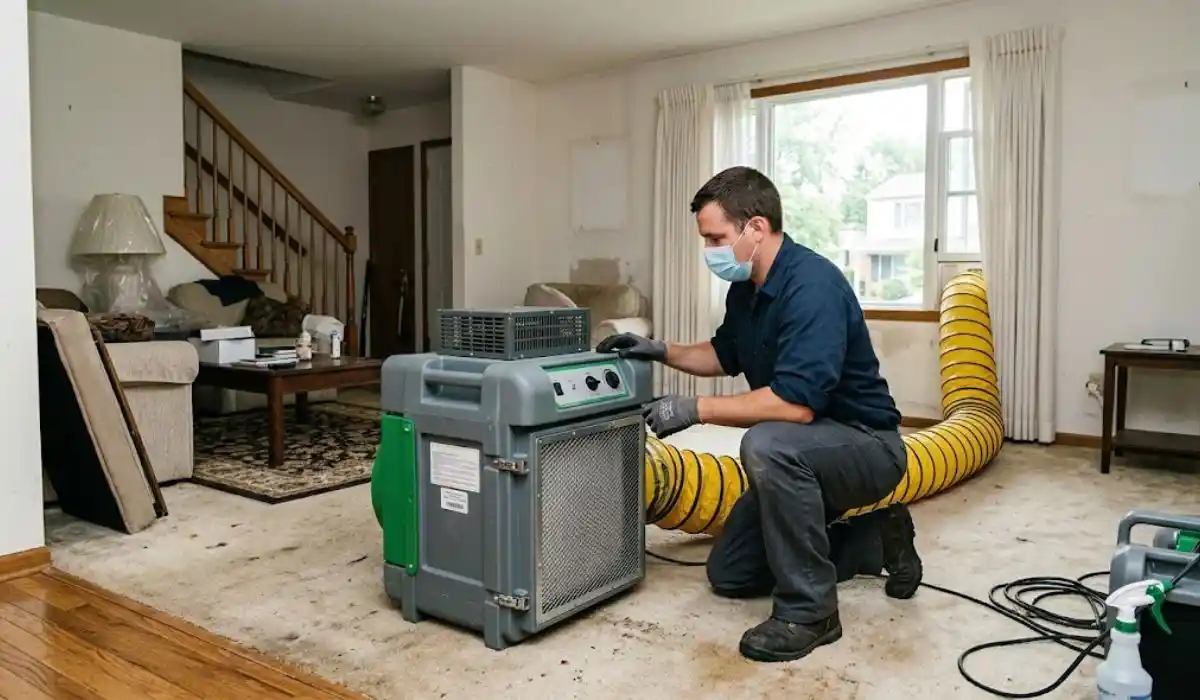
Smoke odor lingers because the particles causing it embedded themselves into porous material during the fire. Airing out a room does nothing, and masking agents only cover the smell until humidity brings it back.
How Fire and Smoke Odor Removal Works
Odor work is source elimination, not fragrance. Crews remove or seal materials holding the deepest odor, clean surfaces that can be salvaged, treat the duct system, and use methods such as hydroxyl or ozone treatment and thermal fogging where the situation calls for them. The property is re-evaluated after treatment rather than assumed resolved.
What Leads To This
These triggers are common nationally, though local heating patterns shift the mix.
Smoke particles absorbed into drywall and insulation
Residue held in carpet, upholstery, and drapery
Odor circulated and retained in HVAC ductwork
Porous framing and subfloor exposed during a fire
Residue trapped in wall and ceiling cavities
Fire and Smoke Odor Removal Needed Now?
A crew can begin work today.
When To Call
Odor Returning With Humidity
The hallmark sign that source material still holds residue.
Smell Strongest Near Vents
Odor concentrated at registers points to duct contamination.
Persistent Smell After Cleaning
Surface cleaning alone did not reach the embedded source.
Odor In Unaffected Rooms
Smell present far from the fire indicates airborne distribution.
Step By Step
Dispatch
Crews mobilised after the fire service clears.
Scope
Written assessment covering all three damage types.
Treatment
Soot, smoke residue, and odour eliminated.
Repair
Finishes and structure rebuilt.
Why Islip Properties See This
These are general risk factors common across the area's housing stock.
Kitchen-Centred Incidents
Cooking remains the leading residential fire trigger.
Original Chimney Stock
Older flues need annual creosote checks.
Older Electrical Systems
Original wiring in mid-century homes carries higher short-circuit risk.
Heating Season Load
Long Island winters mean heavier space heater and fireplace use.
Oil-Fired Heating
Common locally, and a puffback source when service is deferred.
Attached Garage Layouts
Fires starting there reach living space faster than detached structures.
Dense Residential Blocks
Closely spaced homes raise the stakes on response time.
Kitchen-Centred Incidents
Cooking remains the leading residential fire trigger.
Cost Of Fire and Smoke Odor Removal In Islip
Residue type matters as much as area. Protein and oil-based soot take considerably more labour than dry carbon soot.
Odor removal pricing depends on how deeply residue penetrated and how much material has to be sealed or replaced rather than cleaned. Whole-house duct treatment and sealing raise cost above a contained single-room treatment.
Ranges are typical starting points and vary by scope. Every job gets a written, itemized assessment before work begins — call for an evaluation.
Reducing The Risk
Avoid running permanent loads through extension cords.
Test smoke alarms monthly and replace batteries twice a year.
Keep a working extinguisher accessible in the kitchen.
Never leave stovetop cooking unattended, even briefly.
Have chimneys and flues inspected annually before heating season.
Keep space heaters at least three feet from anything combustible.
What You Can Do Now
Avoid Powering Damaged Appliances
Anything exposed to heat or water needs inspection first.
Wait For The All-Clear
Do not enter until the fire service has released the property.
Leave Soot Alone
Wiping residue with the wrong method drives it permanently into surfaces.
Shut Down The HVAC
Running the system spreads smoke residue into unaffected rooms.
Photograph Before Cleanup
Document conditions for your claim before anything is touched.
Remove Undamaged Valuables
Take items out of smoke-affected air where it is safe to do so.
Working With Your Carrier
Contents and structure are often handled under different parts of a policy, which is why we inventory affected contents separately from the building scope.
We document damage, provide detailed scope-of-work reports, and communicate directly with most major carriers. That documentation is provided to you regardless of whether you ultimately file.
If you are still weighing whether to open a claim, the on-site assessment and written scope cost the same either way. Nothing in the documentation obliges you to file. Plenty of property owners review the scope first, compare it against their deductible, and decide from there.
FAQs
Because embedded source material was never removed or sealed, and humidity reactivates it.
They mask temporarily. They do not address the residue causing the odor.
It is effective but requires an unoccupied space and a proper airing-out period afterward.
Typically a few days, depending on penetration depth and treatment method.
In most cases yes, when the source material is properly addressed rather than covered.