Central Islip and Brentwood, sitting well inland from the Great South Bay shoreline that defines flooding risk in East Islip and Bay Shore, carry a housing stock dominated by 1960s through 1980s Colonial and split-level construction, a meaningfully different building era from the 1940s-50s Cape Cods and ranches concentrated in Islip Terrace and Bay Shore's older neighborhoods. That construction-era difference, layered on top of the genuine geographic difference of sitting inland rather than on the coast, produces a distinct water damage risk profile for this part of the township.
Why Inland Location Changes The Risk Category Entirely
South shore Islip communities deal primarily with storm surge, tidal flooding, and a chronically high water table driven by proximity to Great South Bay. Central Islip and Brentwood are far enough inland that direct bay surge essentially isn't a factor. What replaces it is a different set of causes: rainfall volume overwhelming drainage infrastructure, aging supply lines and water heaters reaching end of service life, and the sheer density of multi-family and rental housing in parts of these communities, which means a single plumbing failure can affect several units simultaneously rather than one detached single-family home.
This shift matters practically because storm-surge-focused precautions, elevating mechanical systems above a base flood elevation, worrying about tidal timing, mean far less here than the coastal-community advice would suggest. The relevant risks for Central Islip and Brentwood properties center on plumbing age, drainage capacity during heavy rain, and building density, not surge exposure.
What Split-Level Construction Means For Water Damage Specifically
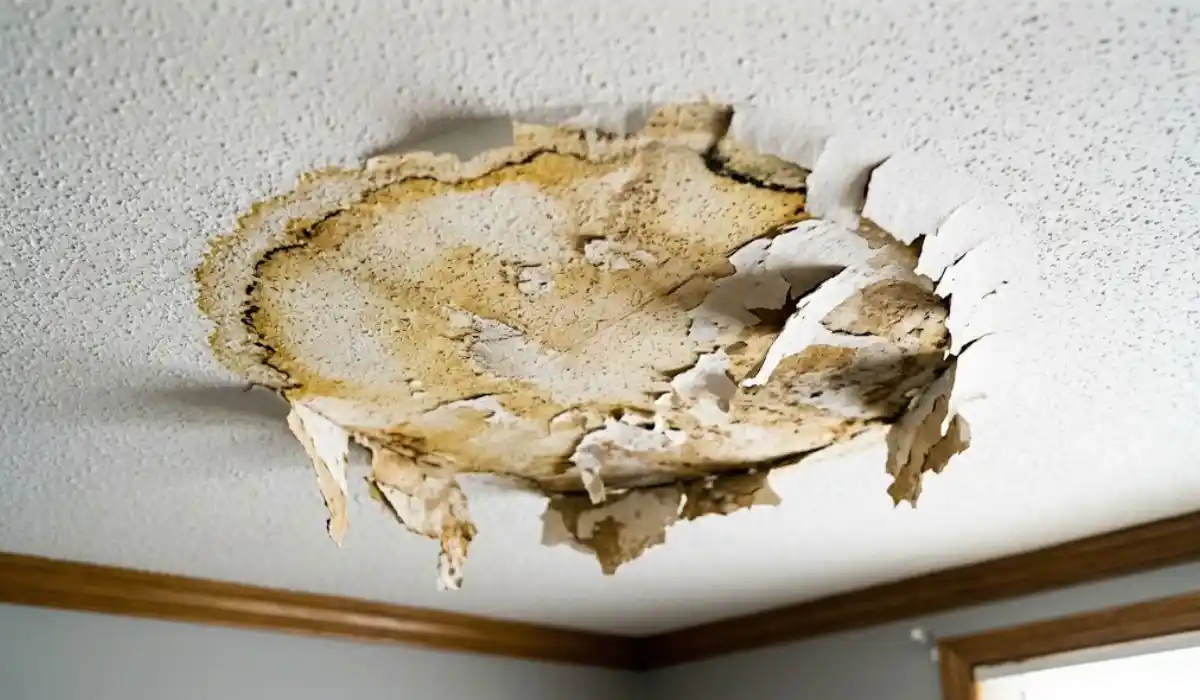
Split-level homes, common throughout this era of construction, introduce a specific vulnerability that single-story Cape Cods don't share: multiple partial levels connected by short staircases mean water from an upper-level plumbing failure has more opportunity to travel between levels before it's noticed, following stairwells and partial-height walls in ways that don't apply to a single-story floor plan. A leak on a split-level's upper floor can affect the lower level significantly before anyone realizes what's happening, which is why a ceiling water damage repair call from this housing stock often traces to a source one full level away, simply because the levels are vertically closer together and more directly connected than in a traditional two-story Colonial.
Colonial-style homes from this same construction era, more common alongside the split-levels in these neighborhoods, generally have more straightforward floor separation, which tends to contain a leak's spread better, though basements in Colonial construction from this period sometimes lack the drainage sophistication that later building code would require, particularly around foundation waterproofing.
Plumbing Age As The Dominant Factor
A home built between 1960 and 1980 is now well past the typical service life expectation for original plumbing components, the exact profile behind most burst pipe repair calls in this part of the township. Water heaters generally last 10 to 15 years; a home with original 1970s plumbing has likely already been through several replacement cycles, but not every property has kept pace, and homes that haven't updated aging supply lines or water heaters carry meaningfully elevated sudden-failure risk regardless of construction quality at the time of the original build.
This is a different risk driver than the freeze-thaw vulnerability that dominates East Islip's older Cape Cod stock. It's less about how a specific pipe run is insulated against winter cold and more about cumulative material fatigue in components that have simply been in service for decades, sometimes well past their expected replacement window.
What Central Islip And Brentwood Homeowners Should Actually Check
Confirming the age of the water heater and any original supply lines is a more useful starting point here than checking exposure to exterior walls the way an East Islip homeowner might. For split-level properties specifically, being attentive to any signs of water intrusion on an upper level, even minor ones, matters more given how readily that water can travel to lower levels through the connected stairwell design. And given the density of multi-family housing in parts of these communities, a plumbing failure's impact on neighboring units is worth factoring into how quickly a response happens, since delay compounds the damage across more than one household at once.
Fire Risk Follows A Similar Construction-Era Pattern
Water damage isn't the only risk category shaped by this housing stock's age. Electrical systems installed during the 1960s-80s construction wave predate many of the safety improvements in later electrical code, and homes from this era that haven't had a panel upgrade or rewiring since original construction carry meaningfully elevated risk of the kind of short-circuit and overload incidents that lead to house fires. This matters in the same neighborhoods discussed here because a property with original 1970s wiring behind original 1970s plumbing is managing two separate, both age-related, risk factors simultaneously, and addressing one during a renovation is a reasonable moment to evaluate the other as well.
What A Pre-Purchase Inspection Should Specifically Cover Here
For anyone buying in Central Islip or Brentwood, a standard home inspection doesn't always dig deeply enough into plumbing and electrical age specifically, focusing more on visible condition than service life remaining. Asking directly about the age of the water heater, whether original supply lines are still in place, and when the electrical panel was last updated gives a clearer risk picture for a home from this construction era than a general inspection report alone, and it's a reasonable, specific question to raise before closing on a property in this part of the township.
Sellers in these communities who've already replaced major systems generally welcome the question, since documented updates are a selling point. It's the properties where the answer is uncertain, or where records weren't kept, that warrant the most caution before closing.
A modest allowance in the purchase negotiation for uncertain-history properties is a reasonable way to account for the added inspection and near-term replacement risk this construction era carries.
None of this is unique to Central Islip and Brentwood specifically. Any Long Island community with a concentrated stock of homes from the same construction decades faces a similar age-related risk curve, but the density of split-level and Colonial construction in these two communities specifically makes the pattern worth naming directly rather than treating as a generic, townshipwide concern.