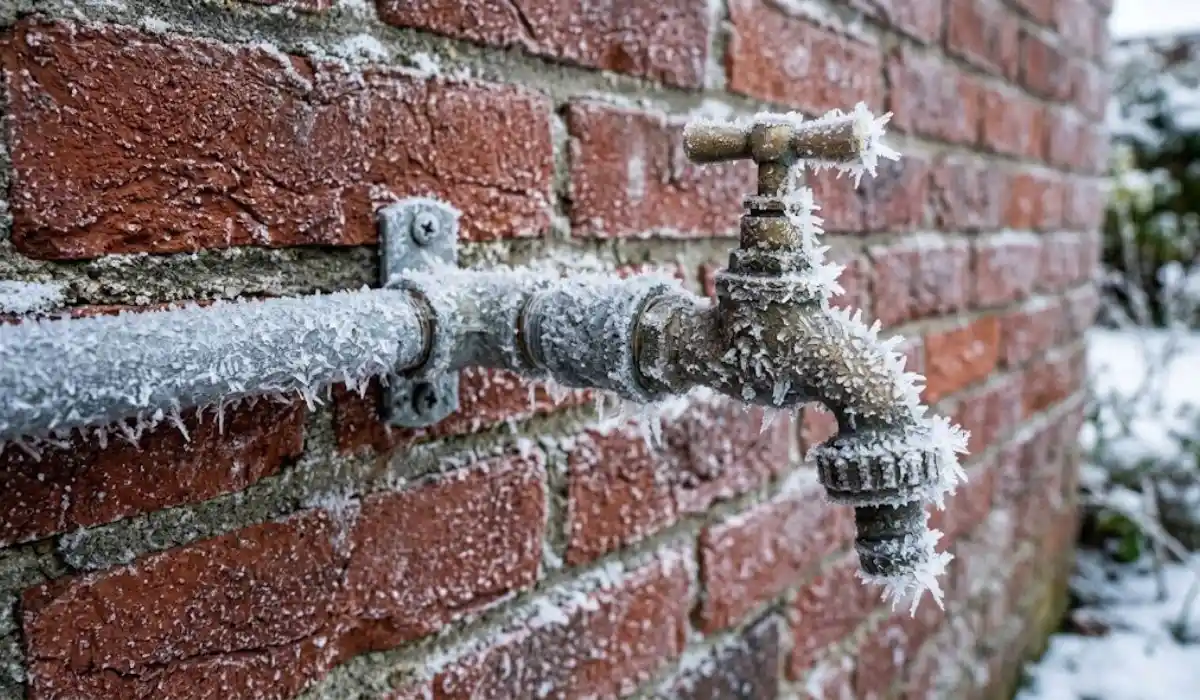
A burst pipe is a volume problem. An unattended supply line can release hundreds of gallons before anyone notices, and on Long Island the cause is frequently a freeze-thaw cycle that stressed a joint weeks before it finally gave way.
How Burst Pipe Repair Works
The response starts at the main shutoff, then moves to extraction and to opening up only as much finished surface as is needed to reach the failure point and dry the cavity. Restoration covers the wall, ceiling, or floor assembly that had to be opened, alongside the drying work in the surrounding structure.
What Leads To This
These are the situations that most often bring a crew to a local property.
Freeze-thaw cycles stressing pipe runs near exterior walls
Aging copper or galvanized supply lines corroding through
Water hammer stressing joints over time
Poorly insulated pipe in crawlspaces and unheated areas
Excessive water pressure on older supply systems
Physical damage during renovation or fastener strikes
Burst Pipe Repair Needed Now?
A crew can begin work today.
When To Call
Sudden Loss Of Water Pressure
A drop at fixtures often means volume is escaping upstream.
Running Water Sound With Taps Off
Audible flow inside a wall or floor with nothing running.
Unexplained Water Bill Increase
A spike without a change in usage points to a hidden release.
Wet Spot Spreading On Wall Or Ceiling
A growing damp area tracking a concealed supply line.
Step By Step
First Contact
Tell dispatch what happened and where.
Inspection
Written scope before any work starts.
Water Removal
Bulk liquid extracted, then structure dried.
Reinstate
Damaged material replaced and finished.
Why Islip Properties See This
The conditions below are why this area generates steady water damage volume year-round.
1940s-50s Housing Stock
Cape Cods and ranches in older neighbourhoods carry original plumbing.
Aging Water Heaters
Units past ten years are a leading sudden-failure point.
Sump Dependence
Below-grade spaces relying on a single pump with no backup.
Flat And Low Roof Sections
Areas where drainage is slow and ponding occurs.
Mature Tree Canopy
Root intrusion into laterals and limb damage during storms.
Bay Surge Exposure
South Shore properties face tidal surge over low bulkheads during nor'easters.
Storm-Drain Backflow
Overwhelmed municipal drains push water back into low-lying streets.
Freeze-Thaw Cycles
Repeated winter freezing stresses pipe joints until they fail.
Cost Of Burst Pipe Repair In Islip
The estimate turns on water category and equipment days more than on gallons. Contaminated water costs more to handle than clean water.
The plumbing repair itself is often the smaller line item. The larger cost is usually the water damage the release caused before it was noticed, plus opening and restoring the finished surfaces needed to reach the failure.
Ranges are typical starting points and vary by scope. Every job gets a written, itemized assessment before work begins — call for an evaluation.
Reducing The Risk
Test the sump pump each autumn and consider a battery backup.
Keep gutters and downspouts clear so runoff drains away from the foundation.
Check under sinks and behind toilets for slow drips every few months.
Have the water heater inspected once it passes ten years of service.
Watch for unexplained increases on the water bill as an early leak signal.
Run a dehumidifier in the basement through humid summer months.
What You Can Do Now
Open Interior Doors
Airflow between rooms helps until professional equipment arrives.
Shut Off The Water
If the source is plumbing, close the main valve before anything else.
Cut Power To The Area
Only if you can reach the panel safely and without standing in water.
Move What You Can
Lift furniture and belongings clear of the wet area if it is safe.
Photograph Everything
Document conditions before anything is moved or cleaned up.
Avoid Wet Ceilings
Sagging drywall overhead can fail suddenly under the weight of water.
Working With Your Carrier
When damage traces to an exterior source like siding or flashing rather than interior plumbing, coverage can depend on whether the failure was sudden or gradual, which is why we document the timeline as clearly as the damage itself.
We document damage, provide detailed scope-of-work reports, and communicate directly with most major carriers. That documentation is provided to you regardless of whether you ultimately file.
If you are still weighing whether to open a claim, the on-site assessment and written scope cost the same either way. Nothing in the documentation obliges you to file. Plenty of property owners review the scope first, compare it against their deductible, and decide from there.
FAQs
Usually near the water meter or where the supply line enters the house. Worth locating before an emergency.
We handle extraction, drying, and restoration, and coordinate with a plumber on the pipe itself.
Repeated freeze-thaw cycles stress joints over a season, so failures often follow weeks of buildup.
Insulating exposed runs, sealing cold-air gaps, and keeping a drip on the coldest nights all reduce risk.
Hundreds of gallons per hour, which is why shutting off the main is the immediate first step.