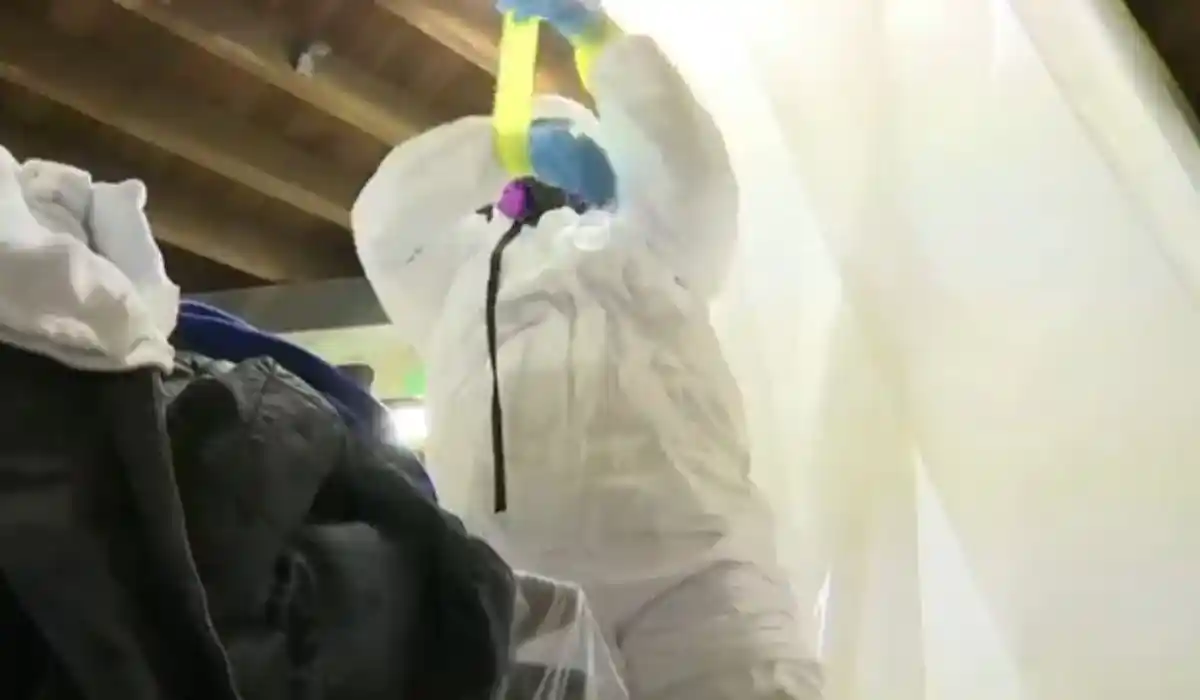
Sewage cleanup is defined by contamination category rather than water volume. A small amount of Category 3 water triggers the same protective, containment, and disposal requirements that a much larger clean-water event would not.
How Sewage Cleanup Works
The scope covers protective equipment for crews, containment of the affected zone, extraction and lawful disposal of the waste stream, removal of porous material, antimicrobial treatment of remaining surfaces, and air scrubbing where the contamination reached occupied space. Documentation is provided for insurance and for your records.
What Leads To This
Across the Islip area, these are the failure points our crews encounter most often.
Main line or lateral blockage backing up into the structure
Septic tank overflow or drain field failure
Municipal surcharge during heavy rain events
Floor drain backflow at the lowest point of the building
Toilet overflow involving contaminated water
Sewage Cleanup Needed Now?
A crew can begin work today.
When To Call
Visible Waste Or Residue
Any solid or discolored residue accompanying the water.
Strong Sulfur Or Sewage Odor
A distinctive smell that intensifies near drains.
Backflow At The Lowest Drain
Wastewater surfacing where gravity takes it first.
Slow Drains Throughout
Multiple slow fixtures indicating a main-line restriction.
Step By Step
Emergency Call
Our line answers 24 hours a day.
Moisture Survey
Meters map how far water travelled.
Mitigate
Extraction and monitored drying begin.
Rebuild
Finishes repaired once readings clear.
Why Islip Properties See This
These factors do not guarantee a problem, but properties matching several see repeat issues.
High Water Table
Areas near Great South Bay sit close to groundwater year-round.
Connetquot Watershed
Interior flood risk driven by river and watershed overflow.
1940s-50s Housing Stock
Cape Cods and ranches in older neighbourhoods carry original plumbing.
Aging Water Heaters
Units past ten years are a leading sudden-failure point.
Sump Dependence
Below-grade spaces relying on a single pump with no backup.
Flat And Low Roof Sections
Areas where drainage is slow and ponding occurs.
Mature Tree Canopy
Root intrusion into laterals and limb damage during storms.
Bay Surge Exposure
South Shore properties face tidal surge over low bulkheads during nor'easters.
Cost Of Sewage Cleanup In Islip
Two variables dominate the estimate: affected square footage, and how much material can be dried in place rather than removed.
Pricing follows contamination spread and disposal volume. Utility-area containment is the low end; contamination reaching finished, occupied space raises both material removal and sanitizing scope substantially.
Every property is different, so these are typical ranges only. A firm, written scope is provided after the on-site assessment.
Reducing The Risk
Replace washer and dishwasher supply hoses every five to seven years.
Insulate exposed pipe runs against exterior walls before winter.
Test the sump pump each autumn and consider a battery backup.
Keep gutters and downspouts clear so runoff drains away from the foundation.
Check under sinks and behind toilets for slow drips every few months.
Have the water heater inspected once it passes ten years of service.
What You Can Do Now
Keep Off Wet Carpet
Foot traffic drives water deeper into pad and subfloor.
Do Not Use A Household Vacuum
Standard vacuums are not rated for water and present a shock risk.
Open Interior Doors
Airflow between rooms helps until professional equipment arrives.
Shut Off The Water
If the source is plumbing, close the main valve before anything else.
Cut Power To The Area
Only if you can reach the panel safely and without standing in water.
Move What You Can
Lift furniture and belongings clear of the wet area if it is safe.
Working With Your Carrier
Where drying required opening walls or removing flooring, that demolition is documented separately from the rebuild so responsibility for each is clear.
We document damage, provide detailed scope-of-work reports, and communicate directly with most major carriers. That documentation is provided to you regardless of whether you ultimately file.
If you are still weighing whether to open a claim, the on-site assessment and written scope cost the same either way. Nothing in the documentation obliges you to file. Plenty of property owners review the scope first, compare it against their deductible, and decide from there.
FAQs
Usually, if the affected area can be contained. We advise keeping people out of that zone.
Drywall contacted by contaminated water is cut out above the affected line and disposed of.
Yes, including scope, photos, and disposal records.
Yes, sanitizing and deodorizing are part of the standard scope.
Immediately. Contamination spreads and odor sets in the longer it sits.