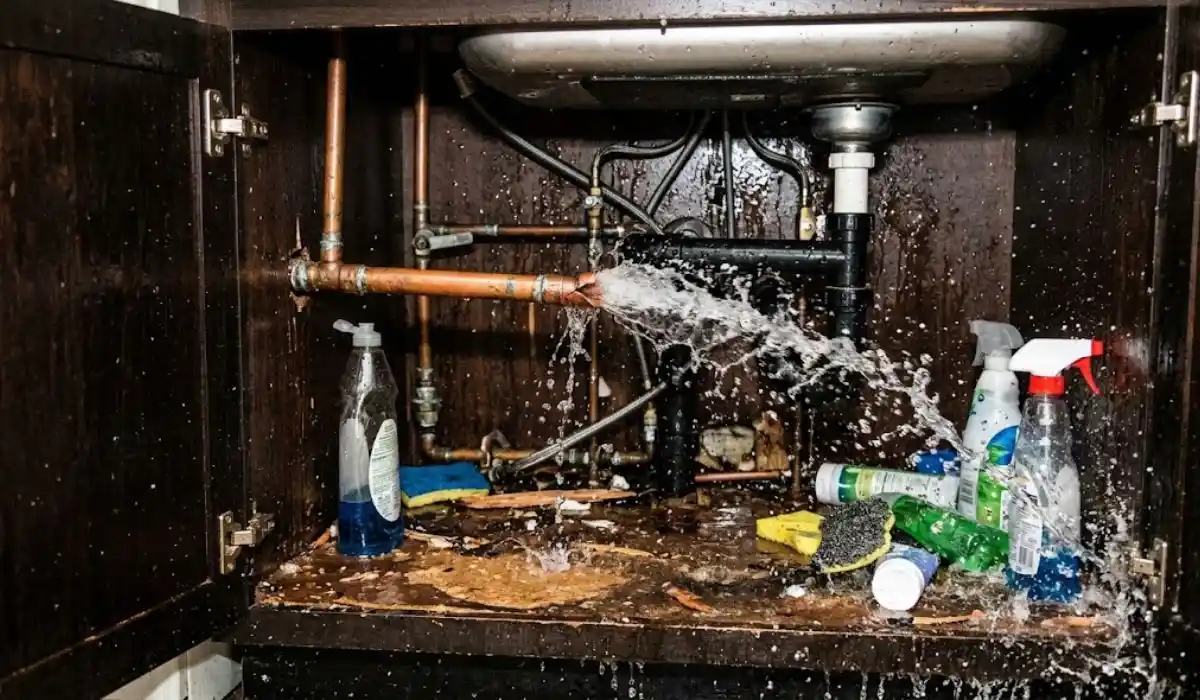
East Islip and the older sections of Bay Shore carry a substantial stock of Cape Cod and ranch-style homes built during the 1940s and 1950s, a very different housing era from the 1960s-80s Colonial and split-level construction more common further inland in Central Islip and Brentwood. That difference in construction era is not just an aesthetic distinction. It changes how a home's plumbing responds to a hard freeze, and it explains why burst-pipe calls in this part of Suffolk County cluster around a specific type of house more than others.
Why Older Construction Freezes Differently
Homes built in the 1940s and 50s were designed and insulated to standards that predate the energy codes that shaped later construction. Pipe runs in these homes are more likely to travel through exterior walls, crawlspaces, and unheated areas with only minimal insulation separating them from outside temperatures, because the building science of the era simply did not prioritize that kind of thermal protection the way later code requirements would.
Original plumbing material matters too. A significant share of homes from this construction era still carry original or early-replacement copper or galvanized supply lines, materials that behave differently under freeze stress than the PEX piping common in newer construction. Copper and galvanized pipe has essentially no give when the water inside it freezes and expands; PEX has enough flexibility to absorb some of that expansion without failing. That structural difference alone explains a meaningful share of the gap in freeze-related failure rates between older and newer housing stock.
The Freeze-Thaw Cycle, Not Just The Cold Snap
A single hard freeze is a known risk, but Long Island winters rarely deliver just one. Temperatures swing above and below freezing repeatedly across a season, and that repeated cycle of expansion and contraction stresses pipe joints more than a single sustained cold period would. A joint in an East Islip Cape Cod might survive one hard freeze in December only to fail in February after several additional freeze-thaw cycles have weakened it incrementally, which is why a burst pipe often seems to come out of nowhere on a day that isn't even the coldest of the season.
This pattern matters specifically for the older housing stock because these homes have simply had more freeze-thaw cycles pass through their original plumbing over the decades than a 1970s split-level in Brentwood has had to withstand on its more modern piping.
What Actually Reduces The Risk
Locating and insulating exposed pipe runs in crawlspaces, attics, and along exterior walls addresses the specific vulnerability a burst pipe repair call keeps turning up in this housing stock. In genuinely exposed sections, allowing a slow drip from the affected fixture during the coldest overnight stretches keeps water moving, which reduces (without eliminating) freeze risk, since moving water is harder to freeze solid than standing water.
Sealing air leaks where cold outside air reaches plumbing, gaps around foundation penetrations, unsealed crawlspace vents, is often a cheaper and more permanent fix than pipe insulation alone, since it addresses the actual temperature exposure rather than just buffering against it. For homes with a documented history of freeze-related issues, replacing the most exposed sections of original supply line with modern, more freeze-tolerant material is worth the cost relative to the water damage a repeat failure causes.
When A Pipe Does Fail
None of these precautions guarantee a pipe in a decades-old Cape Cod won't eventually fail during a hard winter. When one does, the response matters more than the prevention did at that point: locate the main shutoff immediately, and get extraction started as fast as possible, since water from a supply line freezing in an exterior wall cavity often means ice has formed inside the wall as well, which complicates drying and generally calls for a professional assessment rather than a homeowner attempting the fix alone.
The Attic And Crawlspace Factor Specific To This Housing Type
Many East Islip and Bay Shore Cape Cods from this era have low-clearance attic spaces and partial crawlspaces rather than the full basements more common in later construction, and plumbing that runs through these spaces often has minimal protection from attic-level cold in particular. An attic that isn't conditioned space, which is typical in original Cape Cod construction, can drop close to outside ambient temperature during a hard freeze, and any pipe run through that space, common for homes with plumbing serving an upper half-story, faces meaningfully elevated freeze risk compared to plumbing that stays within conditioned living space throughout its run.
Checking whether any part of your home's plumbing passes through an unconditioned attic or crawlspace, rather than assuming all pipe runs stay within heated space, is worth doing specifically because Cape Cod construction from this era doesn't always make that routing obvious from inside the finished living space.
A licensed plumber can typically trace this routing in under an hour for a home of this size, and it's a worthwhile expense the first winter after purchasing an older Cape Cod specifically, before assuming the previous owner's disclosures covered every detail of the plumbing layout.
Signs A Freeze Event Has Already Damaged A Pipe
Not every stressed joint fails immediately. Watch for reduced water pressure at fixtures following a hard freeze even if nothing has visibly leaked yet, since a partially compromised joint can continue functioning at reduced capacity for weeks before failing outright. Any new, unexplained sound of running water when no fixtures are in use is worth investigating promptly rather than dismissing, particularly in the days and weeks following a stretch of hard freezes rather than only during the cold snap itself.
How This Differs From Renovated Versions Of The Same Homes
Not every 1940s-50s Cape Cod in East Islip still carries its original plumbing. Many have been renovated, sometimes multiple times, with supply lines updated to PEX and additional insulation added during kitchen or bathroom remodels. A renovated version of this housing type carries meaningfully lower freeze risk than an unrenovated one, even though both look similar from the street and both fall into the same broad construction-era category. Knowing your own property's renovation history, or having a plumber assess what generation of supply line is actually in the walls, is a more reliable risk indicator than construction year alone.